

Sciatica and slipped discs: when to see a chiropractor and what treatment looks like
By Janice · Updated 2026-07-22

This is general information, not medical advice. If you have severe or worsening symptoms, or any of the warning signs below, see a doctor before booking chiropractic treatment.
Sciatica and slipped discs get talked about almost interchangeably, but they’re not the same thing, and knowing the difference helps you understand what treatment is actually addressing.
What sciatica actually is
Sciatica is the name for pain that travels along the sciatic nerve, which runs from the lower back through the buttock and down the leg. It’s a symptom, not a diagnosis on its own; something is irritating or compressing the nerve, and a slipped (herniated) disc is one common cause, though not the only one. The pain often feels different from ordinary back pain: sharper, sometimes burning, and frequently accompanied by numbness or tingling that reaches below the knee.
How it typically shows up
| Symptom pattern | Likely cause |
|---|---|
| Pain radiating down one leg, past the knee | Sciatica |
| Numbness or tingling in the foot or toes | Sciatica |
| Pain confined to the lower back only | General back strain |
| Pain that worsens when sitting for long periods | Sciatica |
| Sudden weakness in the leg or foot | Needs urgent medical assessment |
When chiropractic care can help
For sciatica caused by disc-related nerve irritation, chiropractic care, particularly spinal decompression techniques, aims to reduce pressure on the affected disc and nerve. Many patients report meaningful pain relief with regular sessions over several weeks. This works best when the case is caught reasonably early and isn’t complicated by significant structural damage or progressive nerve symptoms.
What a treatment plan usually looks like
Treatment typically starts with an assessment to confirm the likely cause and rule out anything needing urgent medical attention. From there, a plan combining spinal decompression, targeted adjustment, and sometimes soft-tissue work is common, often alongside guidance on movements or positions to avoid while healing. Sessions are usually more frequent early on, tapering as symptoms improve. Clinics offering spinal decompression care in the area typically outline this kind of staged plan during the first visit rather than committing you to a fixed package upfront.
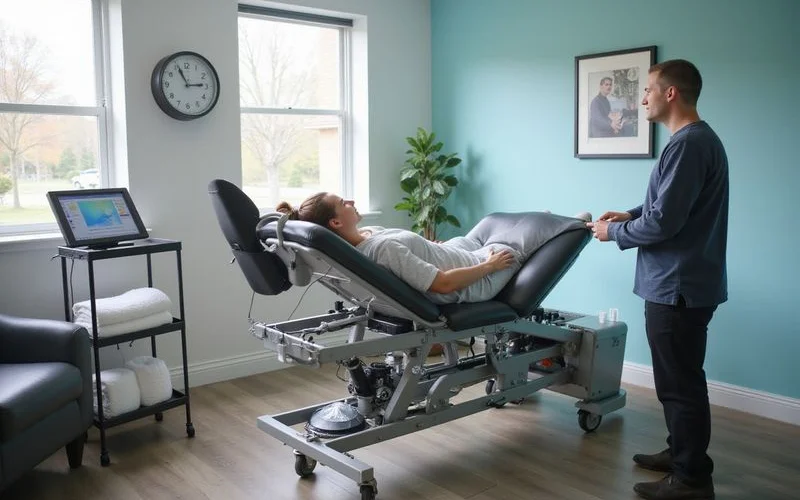
Spinal decompression itself works by gently stretching the spine on a specialized table, aiming to create negative pressure within the disc that can help draw a bulging or herniated portion back inward and take pressure off the nerve. Sessions are generally not painful, though you may feel a stretching sensation. Most plans call for multiple sessions a week initially, since the effect builds gradually rather than resolving in one visit.
What you can do while waiting for your first appointment
Avoid prolonged sitting where possible, since it tends to increase pressure on the lower discs and often worsens sciatic symptoms. Gentle walking is usually better tolerated than sitting still, and lying down with knees slightly elevated can ease pressure for some people. Avoid heavy lifting or twisting movements until you’ve been properly assessed, since these are common triggers for worsening disc-related pain.
How long recovery typically takes
Mild sciatica, caught early, can noticeably improve within two to three weeks of consistent treatment. More established cases, especially where symptoms have been present for months, often take longer, sometimes eight to twelve weeks of regular sessions before the improvement holds. Progress isn’t always a straight line either; it’s common to have better and worse days within an overall improving trend, and a practitioner tracking your symptoms over time can tell you whether that pattern is normal or a sign to reassess the approach.
Red flags that mean see a doctor first
A small set of symptoms should send you to a doctor rather than a chiropractor: sudden loss of bladder or bowel control, numbness in the groin or inner thigh area, or progressive weakness in the leg that’s getting worse rather than staying steady. These can indicate a more serious condition requiring urgent evaluation, and manual therapy is not the right first step if any of these apply to you. For a broader look at chiropractic risks and when to be more cautious generally, our guide on is chiropractic safe covers the full picture.
Getting started
If your symptoms match a typical sciatica pattern without any red flags, a chiropractic assessment is a reasonable first step, and many patients find real relief through spinal decompression and adjustment. You can compare clinics offering this kind of care from the home page, and our methodology explains how we weigh patient-reported recovery outcomes when ranking providers.
Common questions
- How do I know if my back pain is actually sciatica?
- Sciatica typically radiates from the lower back down through the buttock and leg, sometimes reaching the foot, and often includes numbness or a burning sensation rather than pain confined to the back alone.
- Can a chiropractor treat a slipped disc?
- Many chiropractors treat slipped disc cases using spinal decompression and targeted adjustment techniques, and patients often see real improvement. Severe cases with significant nerve compression may need a specialist medical opinion alongside or instead of chiropractic care.
- How long does it take to feel better from sciatica treatment?
- Mild cases can improve within a few weeks of regular sessions, while more established or severe cases often take longer, sometimes several months of consistent treatment.
- When should I see a doctor instead of a chiropractor for sciatica?
- See a doctor first if you have sudden loss of bladder or bowel control, progressive leg weakness, or numbness in the groin area. These can signal a serious condition that needs urgent medical assessment, not manual therapy.