

Posture and scoliosis correction: what actually works and what to expect
By Janice · Updated 2026-07-28
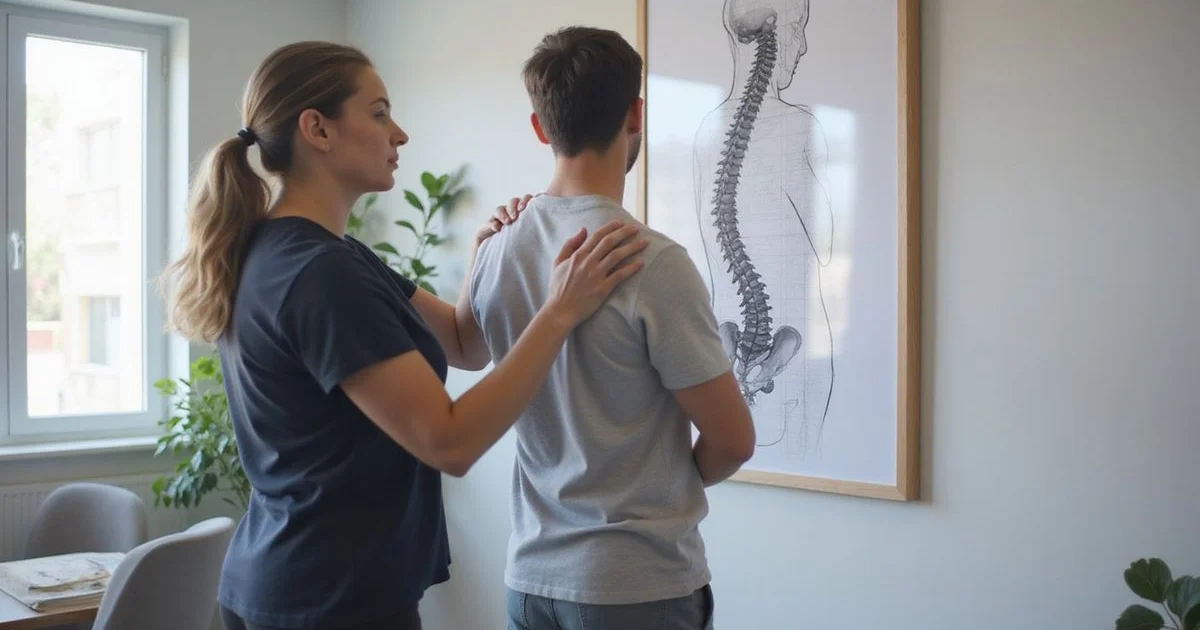
This is general information, not medical advice. For a suspected structural scoliosis curve, particularly in a child or teen, a proper assessment with imaging should guide the treatment plan.
Posture problems and scoliosis get lumped together often, but they sit on a spectrum from a habit you can retrain to a structural spinal curve that needs a longer, more careful plan.
Posture issues vs structural scoliosis
Postural rounding from years at a desk is usually muscular and positional: certain muscles have become tight, others weak, and the body has settled into a pattern. This generally responds well to a combination of adjustment, targeted exercise, and awareness training. Structural scoliosis is different: an actual curvature of the spine, most often identified in childhood or the teenage growth years, that requires measurement, monitoring, and a longer-term plan.
| Feature | Postural issue | Structural scoliosis |
|---|---|---|
| Cause | Muscle imbalance, habit, prolonged sitting | Structural curve in the spine |
| Common age of onset | Any age, common in adults | Usually identified in childhood or adolescence |
| Assessment method | Visual and physical assessment | X-ray to measure curve angle |
| Typical treatment length | Weeks to a few months | Months to years, ongoing monitoring |
| Can it fully reverse | Often, with consistency | Managed, sometimes modestly improved; rarely fully “corrected” |
What an assessment actually involves
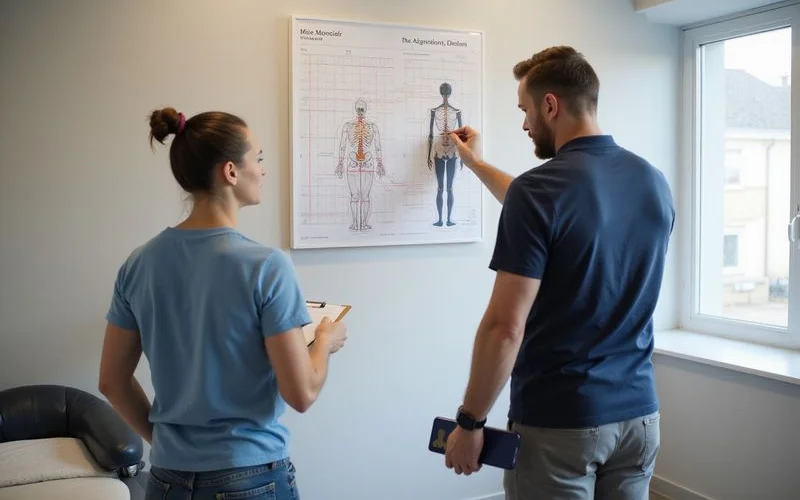
A proper assessment starts with observing your posture from multiple angles, checking shoulder and hip alignment, and testing range of motion. For a suspected structural curve, an X-ray is standard practice to measure the actual curve angle (known as the Cobb angle) and track it over time. Skipping imaging for a genuine scoliosis concern makes it hard to know whether treatment is actually changing anything, so be cautious of a clinic that skips this step for a case that clearly needs it.
What treatment realistically looks like
For postural correction, expect a combination of adjustment to address joint restriction, targeted exercises to rebalance weak and tight muscle groups, and practical changes to daily habits like desk setup and sitting posture. For structural scoliosis, treatment tends to be more involved: regular adjustment and exercise-based correction, alongside monitoring of the curve over months. In more significant cases, chiropractic care works best as one part of a broader plan that may include orthopedic monitoring, not as a replacement for it. If bracing has come up as an option for your case, our page on scoliosis bracing vs chiropractic correction explains how the two approaches typically fit together.
Home exercises matter more than many patients expect for either category. A twenty-minute in-clinic session, however well delivered, competes against many more hours of daily posture the rest of the week. Practitioners who provide specific, simple exercises to do between sessions, rather than treatment alone, tend to see faster and more lasting improvement in their patients.
Why age matters for scoliosis outcomes
A curve caught during a growth spurt in childhood or adolescence responds differently to treatment than one identified in an adult whose skeleton has already finished developing. This isn’t a reason to skip treatment as an adult, since chiropractic care can still meaningfully reduce pain and improve mobility around an existing curve, but it does change what a realistic goal looks like. For a growing child, the aim is often to influence how the curve develops; for an adult, it’s more about managing symptoms and preventing the curve from worsening.
Setting realistic expectations
Mild postural issues can show real, visible change within a couple of months of consistent effort, both in-clinic and with exercises done at home. Structural scoliosis correction moves slower, and the goal is often better described as management and modest improvement rather than a complete fix, particularly in adults whose skeletal growth has finished. A practitioner who’s upfront about this distinction, rather than promising a full correction regardless of your case, is one worth trusting.
What to bring to your first assessment
If you have any prior X-rays, scans, or notes from a doctor or previous practitioner, bring them along. This gives the new practitioner a baseline to compare against rather than starting from zero, and it can save you from repeating imaging that’s already been done recently.
If you’re weighing your options for posture and scoliosis correction, our methodology explains how we factor in patient-reported progress when ranking clinics, and you can compare providers from the home page.
Common questions
- Can chiropractic care actually fix a scoliosis curve?
- Chiropractic care can help manage symptoms and, in some cases, modestly improve curve measurements, especially when started early in a growing child or teen. It's rarely a complete fix for a significant curve on its own, and severe cases often need orthopedic involvement alongside it.
- How long does posture correction take to show results?
- Mild postural issues can show visible improvement within a couple of months of consistent care. Structural scoliosis correction is a much longer process, often measured in months to years, depending on severity and age.
- Is posture correction worth it for adults, or is it too late?
- It's not too late. Adults can still improve posture-related pain, muscle imbalance, and mobility, even though skeletal changes are harder to influence than in a growing child.
- Do I need an X-ray for a posture or scoliosis assessment?
- For a genuine scoliosis concern, imaging is usually recommended to measure the curve accurately. A general posture assessment for desk-related slouching often doesn't require it.